Understanding The Agile Manifesto: A Brief & Bold Guide to Agile – Podcast Now Available

Understanding The Agile Manifesto: A Brief & Bold Guide to Agile by [Apke, Larry]Those of you who may follow this blog may have noticed it has been some time since the last post. It was an eventful summer and it was good to spend some time to catch my breath. Now that the kids are heading back to school, it is time for me to renew my posting. In addition to posting the podcasts, please check back for new Agile posts.

I am pleased to announce that my first book, Understanding the Agile Manifesto: A Brief & Bold Guide to Agile is now available as a podcast. Over the next few days / weeks I will be releasing the book, chapter by chapter, on this website and through the iTunes store under my “Agile Doctor” podcast. Since the book was a series of blogs, the podcasts will also be made available under the original posts.

This project is very dear to my heart as the podcasts were recorded by my son, Vadim Kim, who assisted me over the summer as my intern. I think he did a fantastic job of recording my “little” Agile book and I am sure you will enjoy.

The most recent version of the book includes an Introduction which was never part of any individual post. I have included the podcast of the Introduction below.


Hit Rock Bottom? Maybe Now You’re Ready for Agile

Despair

Despair One of the things I enjoy most about my work is meeting other Agile practitioners and coaches and sharing war stories. Recently I was at an Agile Coffee with people who had various experience with Agile, ranging from complete neophytes to folks with many years of experience. The topic chosen was “What are the preconditions for a large company to be successful implementing Agile?” – a very pointed, yet valid, question to be sure. All of the answers were ones that one might expect; support from upper management, learning culture, etc. except for one. The lone unobvious answer was provided by someone whose opinion I respect. I was somewhat surprised at the time and it has reverberated in my mind ever since, “one precondition for a company to be successful in an Agile transformation is they have failed miserably and have hit rock bottom.”

The term “rock bottom” is most commonly used by folks in NA and AA (Narcotics Anonymous and Alcoholics Anonymous). I found the following definition of rock bottom on a website for alcohol addiction:

… often used to describe a point … when they are finally willing to seek help. Things are now so bad for them that it is impossible to deny their problem anymore. Hitting rock bottom may result due to a particular event, or it can be a slow decline over time. This is a subjective term because some … will be willing to suffer a lot more … than others.

I first came in contact with Anonymous groups through my work in healthcare (nearly a lifetime ago when I was a licensed Health Care Administrator) and have more than one commented on how Agile transformations remind me of some of the twelve steps – with the first step being to admit one has a problem.

So when my friend mentioned that a good indicator for agile transformation success was a company had hit rock bottom I knew exactly what he was referring to. In this particular case he used the examples of the FBI Sentinel Project and Healthcare.gov website debacle. In both cases, it wasn’t until each was a total disaster that Agile was actually tried with any seriousness and rigor and in both cases the results were amazing.

The total spend of these [two] failed [Waterfall] attempts to replace the ACS system was $597m and wasted 10 years. The Agile project, which is now delivering a solution, will only cost $114m for a three-year long project.

DespairIn another recent talk I went to on Agile a gentleman explained how Agile helped with an ad agency. He was only brought in AFTER the agency blew millions on a website that never made it to production. After losing millions I would guess this agency hit “rock bottom”. The good news was that Agile was able to help them to change and allowed them to produce high quality software with a much better time to market (than never).

In my agile coaching practice I have had more than one conversation with enlightened management that has acknowledged our Agile transformation wasn’t working as good as hoped and, barring a complete meltdown, most folks were happy to continue along a non-optimal path. In fact, relative success is a particularly sticky barrier to change as people often confuse the ability to get something done with the ability to get something done optimally. Bill Gates has often remarked, “Success is a lousy teacher. It seduces smart people into thinking they can’t lose.” Sometimes what we mistakenly call “failure” is a much better teacher. Sometimes the lesson is more important than the perception of relative success or failure.

Just this morning I was listening to my local NPR station as they were having a fund drive. Like many others, I couldn’t wait for the drive to be over so I could no longer had to feel the shame and guilt of being a “free rider”. Fortunately, it was the last day of the pledge drive and my mind was only half listening to the chatter of the announcers when they introduced Shankar Vedantam who does segments on the Hidden Brain (which I enjoy immensely). His topic was why people donate (or don’t donate) to pledge drives. He talked about humans’ tendency to pay more attention to emergencies and crisis than what is important. Being the last day of the pledge he hoped what was merely important (donating) would now also be given the status of an emergency because time was running out.

DespairMy mind went immediately back to the concept of “rock bottom” and why this is one good indicator of where Agile can be successful. Sometimes it is only when we hit rock bottom that the importance of being Agile begins to align with the immediate crisis of having to be Agile. It is then, and unfortunately for some, only then when Agile gets the attention and focus it deserves. It is my hope companies realize becoming an Agile organization is essential to their long term survival (at least in organizations that rely heavily on software development), seek the help they need to transition and actually carry out the transition before they hit rock bottom. In the meantime, if you have hit rock bottom (are you listening Yahoo!?), please seek out Agile help.

The 3Ps of Agile Software Development

einstein

I am often faced with explaining the various aspects of Agile to people new to Agile and I have come up with a very simple way to remember (and explain) Agile. I present to you now the “3Ps of Agile Software Development” with the hope you find this useful to your own understanding and an aid in your ability to explain Agile to others.

Philosophy

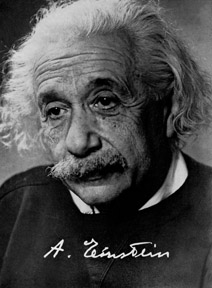
“The world as we have created it is a process of our thinking. It cannot be changed without changing our thinking.” – Albert Einstein

einsteinAt the core of Agile is the Manifesto. A few years back, I even took the time to create business cards that contained the four values and twelve principles. When I heard people say that this is or is not Agile, I could hand them a card and say, “This is Agile.” This is where I start in explaining (and training) Agile because without the philosophical underpinnings one is most certainly lost. I couldn’t give an exact number, but I do know that a high percentage of companies trying to move to Agile are unable to fully embrace and promote the philosophy behind Agile. I wrote my first book, Understanding The Agile Manifesto: A Brief & Bold Guide to Agile, because I have witnessed firsthand the struggle companies are having with adopting the Agile Manifesto. I have seen companies rewrite the Manifesto to omit or change things that they find too difficult to embody and watched good people punished for having the temerity to post the Manifesto at their workplace. The philosophy is the base upon which the other two Ps rest.

Process

“This strange dichotomy, this agonising gulf between the ought and the is, represents the tragic theme of man’s earthly pilgrimage.” – Martin Luther King

martin luther king jr.It is not enough to have the basic philosophical understanding of Agile, we must find ways to embody the principles. There have been a number of ways to embody this philosophy over the years. Take for example, Scrum. Technically it is a framework, but it contains ceremonies (actions) that allow us to realize the Agile philosophy. Why do we do retrospectives? Because the last of the Agile principles state, “At regular intervals, the team reflects on how to become more effective, then tunes and adjusts its behavior accordingly.” While Scrum has claimed a high level of mindshare, there are numerous other processes and frameworks that also help organizations embody the philosophy of Agile (Kanban, DSDM, Crystal, etc.). In fact, Agile’s history is one of empiricism with people “uncovering better ways of developing software by doing it.” This means it was actually Process (and the 3rd P) which came first. It is Agile Processes that help us to realize the philosophy of Agile.

Practices

“Practice does not make perfect. Only perfect practice makes perfect.” – Vince Lombardi

lombardiSometimes when we classify things, people can certainly disagree with our classifications, but when I explain the term “Practices” I am referring specifically to software development practices that are done within the processes and frameworks. It is into this category that I would put things like Extreme Programming (XP) practices as well as something like BDD. What separates these things (which could be argued to be processes) is there more technical nature and the needed expertise of software development professionals (developers and QA) to implement. Processes are things that embody the Agile philosophy which any intelligent individual could understand and facilitate. For example, though it might be optimal for a scrum master to have a development background, one could be successful as a scrum master without it. On the other hand, one could not be successful in performing code review or test driven design (TDD) without knowledge of coding. Why do agilests do BDD? Because through BDD we can realize (among others) the principle that states, “Business people and developers must work together daily throughout the project”. It is Agile software development practices which also help us to realize the underlying Agile philosophy.

While any system of classification subject to interpretation, I have found that speaking to the 3Ps of Agile Software Development has provided a simple and understandable way to introduce people to Agile. If you get a chance to present this, please let me know if it helps you as well.

Project Manager/Scrum Master: A Cry for Agile Help

call for help

Over my time as an Agile Coach I cannot even begin to count the number of times I have been approached by recruiters for a position as a Project Manager/Scrum Master. My coaching colleagues and myself often joke about this particular job title saying, “we like the title Project Manager/Scrum Master because it helps us know which jobs and companies to avoid.” Why would we avoid such positions? For better or worse, by using the title Project Manager/Scrum Master we are able to quickly infer a great deal about the company and their experience with Agile – most of it not positive.

call for helpThe first thing we notice about a company using this title is that they usually have little or no understanding of Agile and Scrum. The duties of a Project Manager and Scrum Master are quite different. Not only do the two roles perform different functions, but they represent a fundamental different in the way they view the world. Project managers in Waterfall try to control projects. Scrum Masters work with Agile Scrum teams to facilitate. In Waterfall, Project Managers have responsibility. Scrum Masters, on the other hand, do not have direct responsibility as the responsibility for success shifts to the development team and Product Owner. Since the Product Owner decides the sequence of the work, a Product Owner is the closest thing to a Project Manager in Scrum. A simple Google search of “project manager versus scrum master” can provide more information on this for those who are curious.

This particular problem manifests when a company desires the potential benefits of Scrum without really understanding Scrum. Without a good understanding, people attempt to map their existing roles with those of Scrum. Let me make one thing perfectly clear. The role of Scrum Master is unique to Scrum and any attempt to map it to existing roles will only result in confusion, frustration and less than optimal outcomes. As coaches, if given the choice of coaching a complete novice as scrum master or “retrofitting” a project manager as a scrum master, we chose the former. It is not that project managers cannot become good scrum masters because many have, but in order to properly train one as a scrum master there is a great deal of work in “unlearning” much of what has been previously trained. With novices the time spent “unlearning” is non-existent.

life perserverThis is why I believe that companies recruiting for Project Managers/Scrum Masters are actually making a very public plea for help. If a company truly wants the benefits of Agile, it is essential that they actually take the time to truly understand that becoming Agile through the use of the Scrum framework is a serious commitment. People must gain a better understanding of software development and how knowledge workers differ, change their fundamental thinking around projects and products, pursue organizational change and realign people around properly configured scrum teams, work with recruiters who understand the difference between project managers and scrum masters and work as partners to recommend better solutions to underlying organizational needs.

For those seeking Project Managers/Scrum Masters, I hear your cries for help. As an Agile Practice Director I would love to help you to better understand your real Agile needs, to help you reorganize your work and people to take advantage of Scrum (other Agile frameworks, methodologies and development techniques), to optimize your organization so that you can deliver high quality software in a shorter time. I am available anytime to provide the help you need. If not me, please reach out to another Agile professional so we can rid the world of Project Manager/Scrum Master for good.

Agile – It’s All About Making Better Decisions

cognitive bias

I’ve been spending a lot of time recently doing research, reading and presenting on human cognitive biases. To the initiated, cognitive biases are defined as

“…a systematic pattern of deviation from norm or rationality in judgment, whereby inferences about other people and situations may be drawn in an illogical fashion. Individuals create their own ‘subjective social reality’ from their perception of the input.” (Wikipedia Definition)

In other words, cognitive biases exist when there is a gap between our perception of reality and objective reality. For example, there is the “confirmation bias” which is our human tendency to seek out or interpret information that confirms one’s existing opinions.

everestWhile the term “cognitive bias” is relatively new (it was coined in 1972 by Amos Tversky and Daniel Kahneman), researchers have already uncovered literally over a hundred cognitive biases, some which are relatively tame like the “google effect” (or digital amnesia), where there is a tendency to forget information that can be easily researched, to ones that can lead to more disastrous consequences like the Sunk Cost Fallacy where people justify increased investment in a decision based on prior investment instead of looking only at future efficacy. The Sunk Cost Effect, along with the Overconfidence Effect and Receny Effect, played a role in the May 1996 mountain climbing tragedy, made famous in the movie Everest, that resulted in the death of five experienced climbers.

A great number of cognitive biases have been found through the work of behavioral economics researchers like Dan Ariely who wrote the wonderful books Predictably Irrational and The Upside of Irrationality. Underlying all of classic economics is the concept of homo economicus, or economic man who behaves in rational ways to maximize individual returns and acts in his own self-interest.   Unfortunately, this is not the case and humans often act irrationally (and predictably so) because of their inherent cognitive biases. Humans all have biases for loss aversion and would choose to avoid loss over a larger corresponding potential gain and thus act as “homo irrationalis” as discovered by behavioral economics instead of “homo economicus” as predicted by classic economics.

It is our cognitive biases that cause us to make irrational decisions. Since behavioral economists found many of these cognitive biases, it was not a great leap to see how cognitive biases would be a paramount concern for the economics of software development. In my coaching practice, a great deal of my time and effort is used in helping organizations make better decisions about software development. Many times the optimal decisions are counter intuitive to people’s inherent biases so my job (and my passion) is helping companies see the world of software development differently so that, when it comes down to making a decision, they have all the knowledge necessary to make the optimal economic decision.

smokestackOne of the most prevalent biases in software development is to see the world in a mechanistic / Tayloristic manner. Taylor’s viewpoint was fine for the old world of physical work, but does not hold up in the complex knowledge work being done by software development professionals today. Unfortunately, most of the people making software development decisions are predominantly influenced by this old, less optimal way of viewing the world, and, as a result, make sub-optimal decisions. For example, in the mechanistic worldview, adding more people to an effort results in a corresponding increase in output. If there is an existing team of seven people and we add seven more then we would (if we hold this mechanistic bias) expect the work to be approximately twice as fast. However, like the behavioral economists that found the real world to be counter intuitive to homo economicus, actual studies have found that the need for increased communication of knowledge work nearly outpaces any incremental increase in individual productivity (see Top Performing Projects Use Small Teams). I have always said that if you want to double productivity of a fourteen person team all that is necessary is to create two teams of seven.

The mechanistic bias can also be seen in many of the ways that the Agile philosophy is implemented. For example, the scrum framework is often trained as a series of ceremonies and actions with little or no understanding of the reason such mechanistic actions are successful. “Scrum Masters” are “certified” with only two days of training and a simple test. The training deals with ideal situations, but when the scrum master actually has to implement scrum, he or she is woefully unprepared. In the real world compromises and decisions must be made. Without understanding the underlying “why” of agile and the basic nature of software development, the decisions and compromises that are made are not optimal. In my experience, this is why project managers are tougher to train than people with no project management experience. When faced with ambiguous information and the need to make optimal decisions, project managers tend to fall back on existing mechanistic knowledge and the decisions made range from mildly irritating to completely disastrous. As I have often pointed out, to say that one was successful with waterfall reeks of confirmation bias because it begs the question of whether or not one would have been more successful using another methodology or framework like Lean or Scrum.

rental carIn addition to the mechanistic bias, software development suffers from another bias, the project-centric bias, which is the tendency to see all work done in terms of projects. Unfortunately, the project-centric bias is so ingrained in companies that there needs to be some radical changes to the way we view software development across all areas, including accounting. Viewing work as a project when we are actually working on software products results in a whole raft of poor software economic decisions like concentrating on features more than quality and security. Remember that no one washes a rental car.

As I think back on my coaching work in agile, the blogs I have written, the many discussions I have had and the presentations I have made, I think that all of these boil down into one very simple thing – my work is all about helping people understand the true nature of the software development business process and, thereby helping them to make better decisions. Understanding our cognitive biases, therefore, is extremely important for my clients and myself because, in the end, Agile is all about making better decisions.

Fear, Slack and Agile Transformation

leadership headstone

This past week I got the chance to finally check out the Silicon Valley Agile Trends and Leadership meetup at Yahoo in Sunnyvale. I really enjoyed the presentation that was given by Dan Kimble on The Leadership Crisis of the Digital Age.

Dan did a great job of framing the problems endemic in today’s high tech world – working too many hours, allowing too many interruptions, superfluous meetings, incessant checking of emails, the inability to unplug, etc. It was interesting to see that nearly everyone in the audience not only recognized the behavior, but agreed that it was irrational.

Fear ImageAfter presenting the group with the problem, Dan allowed discussion as to the possible root causes for such irrational behavior. There were a number of comments that seemed to dance around the true cause like one gentleman who offered that the problem was “culture”. Since this was my maiden voyage, my goal was to keep a low profile, but to those who know me, this is not always possible when the topic is Agile or software development (though on most other subjects I am likely to remain silent). I was compelled to speak up. The real root cause – FEAR.

Most interesting to me was that once that comment was made, it seemed to me that light bulbs starting going off. Fear. Ah yes. I check my emails at all hours so that my boss and co-workers can see how hard I work, how committed I am to the cause. I stay late so that people can see me and will know that I am not replaceable. If I have anything that looks like slack time, I may get sent back home (in some cases home can be very far away). We all seemed to know it, but it was almost like, even in that room of agile aficionados, we were afraid to give it a name.

Fear is a very good motivator. Like sugar it is great for short-term gain, but one cannot live on junk food alone. The problem is that our so-called leaders these days rely almost exclusively on this motivational junk food. The facts are that working over 40 hours is not productive, that not having down time leads to stress and burn out, that a culture of fear leads to employee disengagement and turnover, but facts be damned with our new breed of leaders.

The fear is so bad that all slack has been driven out of day. We do not have the time to think. We do not have the time to plan. We do not have the time to learn. We do not have the time to create long-term strategy. We do not take the time to train. We do not have time to form personal bonds with our co-workers. We do not have the time to build healthy relationships with our clients, let alone our own families. We do not have time to change. We do not have time to transform.

SlackIt is the lack of slack that is the single biggest factor that will derail your agile transformation (or any other significant workplace initiative), even though everyone will benefit from a proper adoption of agile. We are so busy implementing on the newest bright shiny object that we cannot take the time necessary to allow for a proper agile implementation.

So, if there are any “leaders” out there looking to make significant changes in your organization, like an agile transformation, please pay attention. If you want change, you must first remove fear. In its place, install some slack. Give back some time. Allow people to learn. Allow people to reflect. Allow people to change. Allow people to fail gracefully. You want to lead? Give them a reason to follow, something that aligns with their own intrinsic motivation. Stop using motivational junk food. Stop using fear.